Black history is an integral part of Britain’s national story. While October provides a focused opportunity for engagement, there should be a year-round commitment to visibility, education and recognition.
Black history is not a specialist subject it is present in our towns and cities, in public service, in the arts, in business, in faith communities and in family memory. It forms part of the social, cultural and civic development of the United Kingdom.
Throughout October, communities, schools, organisations and institutions across the country will honour the contributions of Black people to Britain’s past, present and future.
This year’s theme, “Honouring Our Communities,” invites us to recognise the individuals whose everyday contributions shape, support and sustain Black life across the United Kingdom.
Black History Month 2026 invites us to look more closely at something often taken for granted, the communities that shape, support and sustain us. This theme is not simply about place or postcode. It is about people. Across Britain, there are individuals whose contributions are part of everyday life, yet too often go unseen. Volunteers who give their time without expectation. Teachers who shape futures beyond the classroom. Nurses and carers who offer dignity and compassion. Community leaders who bring people together, often without recognition. These are the people who help to hold our communities together. Their work may not always be recorded, but it is felt in relationships, in support systems, and in the spaces where people find belonging.
From early Black presence in Britain to the Windrush generation and beyond, community has been central to resilience, progress and identity. That legacy continues today not only through major milestones, but through consistent, everyday contributions.
“Honouring Our Communities” is about making those contributions visible. It asks us to consider whose work we value, whose stories we tell, and whose contributions we may have overlooked. There is no single story of Black Britain. There are many communities, many experiences and many journeys. This theme creates space for that complexity and for the individuals within those communities to be fully recognised.
At Alpha we will be celebrating Black History Month in several ways. We have invited all colleagues to have open conversations with each other and residents and encouraged those residents who have black or mixed black heritage to share experiences of living and working at Alpha.
We will share the stories and celebrate the contribution of notable black activists in the political and housing sector.
We will be hearing from Esther Akinlade our Development Manager at Barnfield about what it means to be a black woman working for Alpha. Esther will be writing a blog during October which will be available on the Website, and on One Alpha for colleagues.
Black Trailblazers in UK Social Housing Sector
It is important to recognise not only the remarkable achievements of Black individuals in politics, culture, and civil rights, but also those who have made lasting contributions to the social housing sector. The Housing Quality Network have produced the following article detailing Black trailblazers in the Uks social housing sector:
Housing has been a vital battleground for social justice in the UK, with Black activists and leaders fighting tirelessly for fair, dignified, and equitable living conditions. This blog highlights the contributions of ten key figures who have played a pivotal role in shaping housing policy, advocacy, and awareness in the UK.
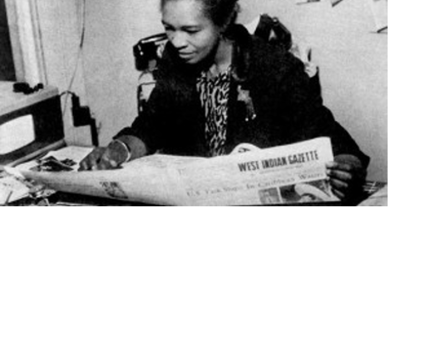
Claudia Jones (1915-1964)
Claudia Jones was a journalist, activist, and community leader whose work laid the foundations for Black activism in the UK. Best known for sowing the seeds of what would become the Notting Hill Carnival with her BBC broadcasted indoor ‘Caribbean Carnival’ at St Pancras Town Hall in 1959, Jones also played a significant role in improving the housing conditions of Black immigrants, particularly the Windrush generation. Arriving in the UK to face overcrowded and unsanitary housing, Jones organised protests and campaigns to demand better living conditions for Black communities, bringing the housing struggles of immigrants to national attention.
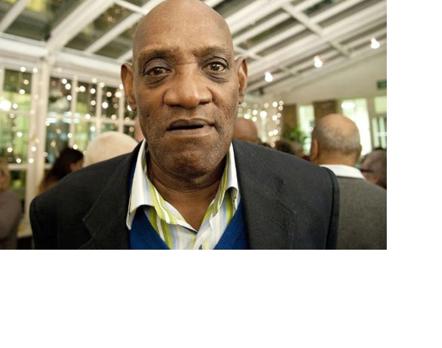
Darcus Howe (1943–2017)
A radical voice for Black liberation in Britain, Darcus Howe is perhaps best known for his activism in the civil rights movement, but his influence extended to the fight for better housing. A powerful orator and organiser, Howe campaigned against the appalling living conditions many Black families faced, particularly in London. His work highlighted the deep racial inequalities within the housing system, and he fought to ensure that the struggles of Black communities were addressed in both policy and public discourse.
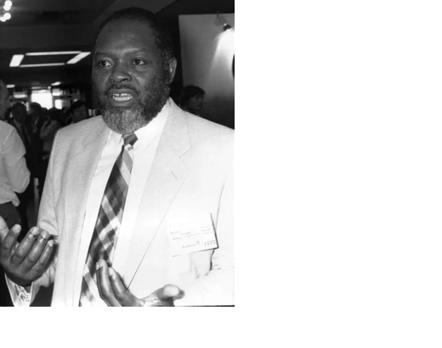
Bernie Grant (1944–2000)
A pioneering voice in British politics, Bernie Grant was one of the first Black MPs, representing Tottenham from 1987 until his death in 2000. Grant’s advocacy for the working-class Black community was central to his political career. In a borough known for its poor housing conditions, Grant worked relentlessly to tackle overcrowded, substandard social housing. He championed the rights of tenants, pushing for improvements in housing services and fighting racial discrimination in the allocation of homes. His legacy includes a stronger focus on housing justice for marginalised communities.
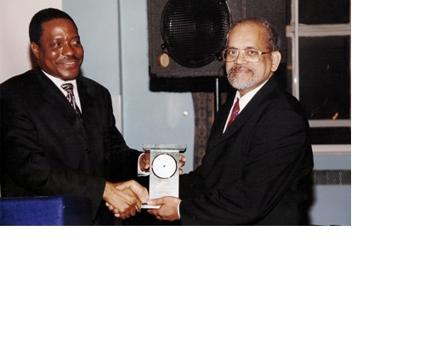
Tony Soares (b.1947) (Right)
Tony Soares has been a leading figure in the Black liberation movement and a key voice in the struggle for housing rights in London through his role in establishing and leading the Ujima Housing Association.
Ujima, which became one of the largest Black-led housing associations in the UK, was instrumental in providing affordable homes for Black and ethnic minority communities, who often faced systemic barriers in the mainstream housing market. Soares’s efforts helped address housing inequalities and promote community empowerment at a time when many Black families struggled to find suitable housing due to racial discrimination.
His leadership at Ujima was transformative, and he advocated for not only providing homes but creating inclusive environments where tenants could thrive. Ujima became a model for other Black and Minority Ethnic (BME) housing associations, and its legacy has had a long-lasting impact on BME housing provisions in the UK.
His activism made a lasting impact on housing policy and tenant rights. If you would like more information on Tony Soares and the history of Black housing associations, Elaine Bowes’ book, The Evolution of Black and Minority Ethnic Housing Associations, offers valuable insights.
Olive Morris (1952-1979)
A revolutionary Black feminist and community activist, Olive Morris is remembered for her passionate advocacy for housing rights. By the 1970s, it had become extremely difficult for Black and Asian communities to access housing in Britain. In these political surroundings, Olive became interested in the squatter’s movement as a solution to housing for these communities. She was the first to squat a privately owned home in Brixton and fight off illegal evictions, setting an example for homeless people across the country.
Morris co-founded the Brixton Black Women’s Group and was actively involved in organisations such as the Organisation of Women of African and Asian Descent (OWAAD), which addressed issues including housing, racism, and gender equality. Her direct-action approach brought attention to the housing crisis and made her an iconic figure in both the Black Power movement and the fight for social housing.
Morris died in 1979 at the age of 27. She left a lasting imprint on women’s activism and the Black Freedom Movement. In 1986, Lambeth Council named a local building in her honour. In 2008, the ‘Remembering Olive Collective’ established a community project to promote her legacy. Morris was voted to feature on the Brixton Pound.
Diane Abbott (b. 1953)
The first Black woman to be elected to the House of Commons, Diane Abbott has been a tireless advocate for social justice throughout her career. She has often spoken about the housing crisis, drawing attention to its disproportionate impact on Black and minority ethnic communities. Her work in Parliament has highlighted the urgent need for more affordable housing and better protections for tenants, particularly those in inner-city areas where Black communities are often concentrated. Abbott’s consistent advocacy ensures that housing remains at the forefront of the fight for equality.
Trevor Phillips (b.1953)
Trevor Phillips has long been a prominent voice in the fight against racial inequality. As a former head of the Commission for Racial Equality (CRE) and the Equality and Human Rights Commission (EHRC), Phillips has addressed the systemic inequalities that affect Black communities, particularly in housing. He has spoken out against the housing policies that have contributed to segregation and social exclusion, calling for reforms to create more equitable housing opportunities for all.
Dr Leroy Logan MBE (b. 1957)
Former police superintendent Leroy Logan is best known for his work to improve race relations between the police and the Black community. However, his advocacy extends beyond policing to include social housing. Logan has been a vocal critic of gentrification in London, which has displaced many working-class and Black families. He supports efforts to ensure that local communities are not pushed out by redevelopment schemes and continues to advocate for fairer housing policies that serve all residents.
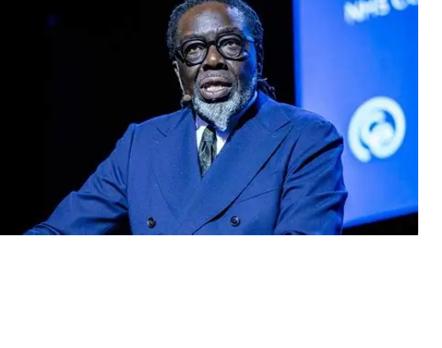
Lord Victor Adebowale (b. 1962)
A modern-day champion for social justice, Victor Adebowale has made significant contributions to the UK’s social housing sector. As the CEO of Turning Point and a founding member of Places for People, Adebowale has worked to address housing inequality and advocate for affordable, high-quality social housing. He has consistently pushed for policies that focus on the most vulnerable members of society, including those from Black and minority ethnic backgrounds. His work bridges the gap between housing, health, and social care, recognising the critical role that secure housing plays in people’s overall wellbeing.
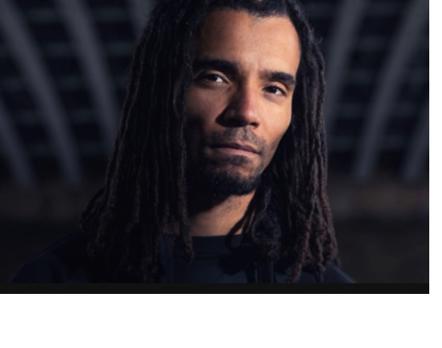
Akala (b. 1983)
Akala, a celebrated author, musician, and activist, has used his platform to raise awareness of the systemic racism that underpins many areas of British society, including housing. His work consistently links the housing crisis to broader issues of inequality, highlighting how Black communities are disproportionately affected by poor housing, overcrowding, and gentrification. While not a housing policy expert, Akala’s voice has brought these issues to the forefront of public debate, making him an important figure in the fight for housing justice.